
Multiple sclerosis Done at Millenium MRI
Millennium MRI — Ocala, FL: 2023 E Silver Springs Blvd Unit 301, Ocala, FL 34470. P: (352) 900-5501 | F: (352) 900-5502. Hours: Monday-Friday 9am to 5pm. Saturday & Sunday: Closed.
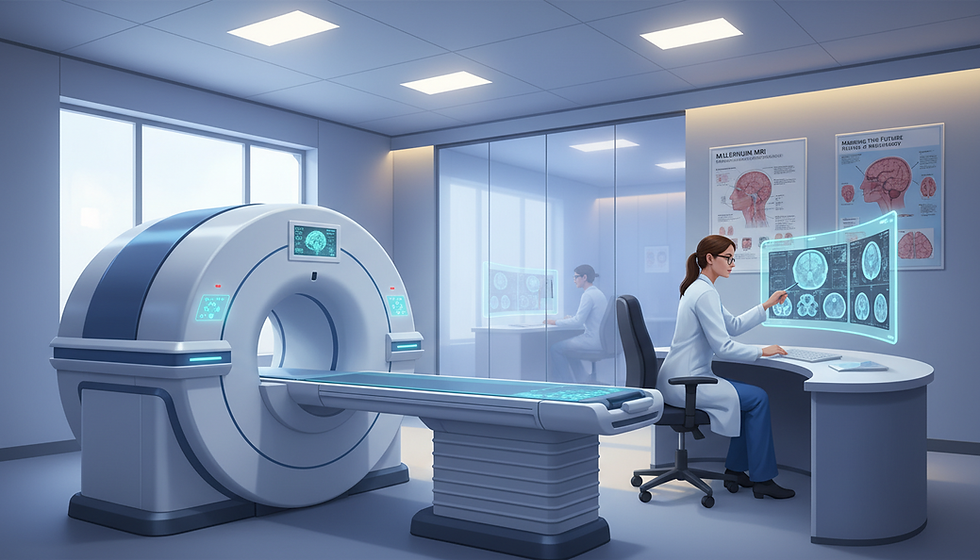
This patient-friendly how-to guide explains Multiple sclerosis Testing at Millennium MRI. It clarifies how mri fits into a modern workup and what patients can expect at the appointment.
MRI is nearly universally used when possible because it is sensitive and helpful for tracking disease activity. Diagnosis remains clinical, based on history and a neurologic exam, with imaging as strong supportive information.
The guide previews common symptoms that prompt imaging, how clinicians look for specific lesion patterns over time, and what scans done with and without contrast mean in practice. Readers are reminded that many symptoms have other causes, so tests aim to gather accurate data and rule out look‑alike conditions calmly.
Patients usually schedule imaging after a referral. When calling, have the ordering provider’s information ready. Follow-up scans are often part of ongoing care so clinicians can monitor change and plan next steps.
Key Takeaways
Millennium MRI Ocala provides patient-centered imaging and clear scheduling details.
MRI supports but does not replace clinical diagnosis for sclerosis-related concerns.
Expect information on symptoms, lesion patterns, and contrast use.
Testing helps rule out other causes and informs treatment decisions.
Bring your provider’s referral and contact details when you call to schedule.
Understanding multiple sclerosis and why testing matters
Knowing how inflammation disrupts nerve signals in the brain and spinal cord explains why symptoms can be wide-ranging. The immune system can damage protective coverings around nerve fibers, which slows or blocks signals along the central nervous system.
How inflammation affects the brain and spinal cord
The process creates scars or lesions that change how nerves send messages. That can cause vision, movement, or thinking problems depending on where lesions form in the nervous system.
Common symptoms that lead people to seek evaluation
Fatigue and trouble concentrating
Blurred vision or eye pain
Numbness, tingling, or limb weakness
Balance or coordination problems, dizziness
Muscle stiffness, spasms, and bladder changes
When symptoms require urgent care
Sudden one-sided weakness or numbness, abrupt vision loss, or severe balance loss may signal a stroke. Do not drive—call emergency services right away.
Document when symptoms start, how long they last, and any triggers. That record helps clinicians choose targeted imaging of the brain or spinal cord and speeds appropriate referrals in Ocala, FL. To schedule imaging after discussing symptoms with your provider, call Millennium MRI at (352) 900-5501. Hours are Monday–Friday, 9am–5pm.
Multiple sclerosis Testing: how MS is diagnosed today
Clinicians combine symptoms, neurologic exam findings, and targeted imaging to build a clear picture before making a formal diagnosis. Imaging at Millennium MRI is coordinated with the ordering clinician and serves as one part of that broader pathway.
The core concept of lesions “disseminated in space and time”
Disseminated in space means clinicians look for characteristic lesions in typical areas of the brain and spinal cord. Disseminated in time means finding signs that activity happened at different points, not all at once.
How the 2017 McDonald criteria support earlier diagnosis and treatment
The 2017 McDonald criteria let neurologists use imaging and, in some cases, CSF oligoclonal bands as additional evidence of spread over time. This can shorten the interval to a working diagnosis when clinical and imaging findings match the expected pattern.
Why MRI alone isn’t enough and how mimics are ruled out
MRI provides strong support but does not confirm disease by itself. Doctors review labs, exam results, and red flags that point toward other conditions.
Look for atypical symptoms or imaging features that suggest alternative causes.
Use follow-up imaging and tests when the picture is unclear.
Prioritize accurate diagnosis to avoid inappropriate treatments.

Step-by-step: what to expect from an MRI for suspected MS
Understanding the visit helps patients feel prepared. When a provider orders an mri, scheduling is coordinated with Millennium MRI locations, including Ocala, FL. Hours are Monday–Friday, 9am–5pm; weekends are closed.
Brain MRI with and without contrast for initial imaging
Initial imaging usually includes a brain mri with and without contrast. Contrast highlights active inflammation and helps radiologists tell newer lesions from older scars.
Bring prior scans and clinical notes so images can be compared for progression over time.
Spinal cord MRI when symptoms suggest it
If symptoms localize to the spinal cord or the brain study is inconclusive, a spinal cord mri is added. Whole cord imaging (cervical through lumbar) is often recommended, with focus on cervical and thoracic regions where lesions commonly appear.
How radiologists evaluate scans
Radiologists review lesion location, size, enhancement (sign of active inflammation), and pattern across brain and spinal cord. They compare findings to prior images to assess progression.
Timing, follow-up imaging, and what “new lesions” mean
New lesions on a later exam can show disease activity over time. Simultaneous enhancing and non‑enhancing lesions on one exam may also suggest dissemination in time.
"High-quality imaging supports clinical decisions, but results must be interpreted with the full medical history."
Step | What to expect | Why it matters |
Scheduling | Provider order, call Millennium MRI (Ocala & regional sites) | Ensures correct protocol and insurance verification |
Arrival | Check-in, safety screening, bring prior imaging | Improves comparison and image usefulness |
Scan | Brain and/or spinal cord mri, with and without contrast | Detects active inflammation and lesion distribution |
Reporting | Radiologist issues findings to ordering clinician | Test results integrated into clinical care plan |
Patients should expect clear test results delivered to their neurologist. Millennium MRI centers in Ocala and nearby locations provide access to ordered exams and high-quality imaging to aid next steps.
Other tests your neurologist may include to confirm diagnosis
When imaging and clinical history leave uncertainty, a neurologist may include additional studies to get clearer information. These follow-up steps help confirm a diagnosis or point to other conditions so treatment is safe and targeted.
Spinal fluid analysis and oligoclonal bands
A lumbar puncture lets clinicians examine spinal fluid for immune activity. Finding oligoclonal bands or a raised IgG index supports central nervous system inflammation.
Accurate interpretation requires matched serum and spinal fluid samples to avoid confusion from blood antibodies.
Blood tests and autoantibody testing
Blood tests rule out infections, vitamin deficiencies, and autoimmune mimics. Specific antibody tests — such as AQP4-IgG or MOG-IgG — may be ordered when signs are atypical to avoid misdiagnosis.
Evoked potentials and neurologic exam
Evoked potential studies measure how fast signals travel from eyes or ears to the brain. Combined with a focused neurologic exam, they show functional impact on the nervous system.
Neurologists often combine imaging, labs, and functional tests rather than rely on one result.
Providers commonly stage tests: early findings guide whether more studies are needed.
The goal is accurate evidence to protect patient safety and avoid unnecessary treatment.
Patients typically start with a primary care referral to a neurologist, then complete ordered tests. Imaging at Millennium MRI in Ocala remains a key step in that broader workup — call (352) 900-5501 to schedule the imaging portion after your provider’s order.
After testing: understanding results, next steps, and support
Receiving imaging and lab results is an important moment for people and their care teams. Results help clinicians sort findings into common categories: relapsing‑remitting, primary progressive, secondary progressive, or a clinically isolated episode.
Classification depends on symptom history, exam findings, and how lesions appear over time. A single isolated episode may not become a diagnosis of chronic disease, but typical brain lesions raise risk—so follow-up matters.
Why careful follow-up matters
Symptoms and imaging evolve. Repeat imaging and clinical visits let clinicians update the working diagnosis and adjust plans if new evidence appears.
How treatment choices are guided
Early decisions—steroid treatment for relapses or starting disease‑modifying therapies—use imaging plus labs and the mcdonald criteria. Many therapies require baseline and ongoing bloodwork to monitor safety.
"Timely results and coordinated care help people access the right treatments and support sooner."
Next step | Why | Who to contact |
Schedule follow-up imaging | Track new lesions or change | Ordering clinician / Millennium MRI |
Consider early therapies | Reduce relapses and preserve function | Neurologist / MS nurse |
Build care team | Rehab, mental health, and community support aid recovery | Primary care, PT/OT, support groups |
Ready to complete ordered imaging? Call Millennium MRI in Ocala, FL at (352) 900-5501. Address: 2023 E Silver Springs Blvd Unit 301, Ocala, FL 34470. Hours: Monday–Friday 9am–5pm. Additional locations (Jonesboro, Marion, North Little Rock, Largo, Tamarac) are available for convenience.
Conclusion
To close, this section outlines what to expect next and how to get timely imaging when needed.
Pathway summary: symptoms prompt a clinician visit, a neurologist reviews history and exam, and an MRI provides high-value imaging evidence. Additional labs or functional tests may follow to exclude mimics and increase confidence in a clinical diagnosis.
The central concept is that a diagnosis of multiple sclerosis rests on characteristic lesions seen across space and time, plus clinical findings and the 2017 McDonald criteria. MRI helps detect and monitor lesions but does not stand alone.
If sudden, severe symptoms occur — such as one-sided weakness, numbness, or abrupt major vision loss — seek emergency care rather than waiting for routine appointments.
To schedule ordered imaging, call Millennium MRI — Ocala, FL: 2023 E Silver Springs Blvd Unit 301, Ocala, FL 34470 | P: (352) 900-5501 | Hours: Mon–Fri 9am–5pm (Closed Sat–Sun). Alternative sites include Jonesboro, Marion, North Little Rock, Largo, and Tamarac.
FAQ
What is the service titled "Multiple sclerosis Done at Millenium MRI"?
This service provides specialized MRI imaging and coordinated diagnostic support for people with suspected central nervous system disease affecting the brain and spinal cord. Millenium MRI offers protocols optimized to detect white-matter lesions, inflammation, and other changes that help neurologists make timely, evidence-based decisions.
How does this condition affect the central nervous system, brain, and spinal cord?
The disease causes focal areas of damage to nerve insulation and sometimes inflammation, which disrupts signal transmission in the brain and spinal cord. That disruption produces symptoms such as sensory changes, weakness, balance problems, or visual disturbances, depending on the location of the damage.
What common symptoms prompt people to seek testing?
People usually seek evaluation for persistent or unexplained symptoms such as numbness, limb weakness, trouble walking, vision loss or double vision, severe fatigue, dizziness, or bladder and bowel changes. New neurological symptoms that last more than 24–48 hours often lead to imaging and specialist referral.
When should symptoms be treated as an emergency rather than routine testing?
Seek emergency care for sudden vision loss, sudden severe weakness on one side of the body, sudden trouble speaking or understanding speech, or signs of stroke. Rapid onset of severe symptoms needs immediate assessment to rule out acute causes that require urgent treatment.
What does it mean for lesions to be "disseminated in space and time"?
That phrase means there are separate areas of damage in different regions of the central nervous system and that new lesions have appeared at different times. Demonstrating both spatial and temporal spread helps clinicians distinguish this disease from a single isolated event.
How do the 2017 McDonald criteria help reach an earlier diagnosis?
The 2017 update allows MRI evidence and certain laboratory findings to show dissemination in space and time more clearly, enabling neurologists to diagnose sooner when clinical signs and imaging meet the criteria. Earlier diagnosis can open access to disease-modifying therapies sooner.
Why isn’t MRI alone sufficient for diagnosis?
MRI is essential but must be interpreted with clinical history, neurologic exam, and other tests. Many conditions can mimic similar MRI findings, so physicians use scans alongside symptoms, laboratory results, and follow-up exams to avoid misdiagnosis.
What are common "red flags" or mimics that may point to other conditions?
Red flags include progressive symptoms from onset, fever or systemic signs, atypical lesion patterns on imaging, prominent spinal cord enlargement, or specific blood test abnormalities. These findings may suggest infections, vascular disorders, or autoimmune diseases instead.
What should a patient expect during a brain MRI with and without contrast?
A brain MRI session may take 30–60 minutes. The noncontrast sequences visualize structural lesions; contrast (gadolinium) highlights active inflammation or breakdown of the blood–brain barrier. Technologists will explain safety screening and the injection process if contrast is needed.
When is a spinal cord MRI recommended?
A spinal scan is ordered when symptoms involve limb weakness, sensory level changes, or bladder and bowel dysfunction, or when brain imaging suggests lesions that warrant cord evaluation. Scanning the cervical and thoracic cord detects lesions that brain MRI can miss.
How do radiologists evaluate lesions, inflammation, and progression over time?
Radiologists assess lesion number, size, location, and contrast enhancement. They compare current scans with prior imaging to identify new or enlarging lesions. Serial imaging helps track disease activity and treatment response.
How soon should follow-up imaging be scheduled, and what does a "new lesion" mean?
Follow-up timing depends on clinical context; commonly a repeat MRI at 3–6 months is used after an initial event, then annually or as guided by symptoms. A new lesion indicates recent disease activity and may prompt treatment changes or closer monitoring.
What other tests might a neurologist order to confirm a diagnosis?
Common adjunct tests include lumbar puncture for cerebrospinal fluid analysis to look for oligoclonal bands, blood tests to exclude mimicking conditions and autoantibodies, and evoked potentials to assess nerve conduction. Each result supports the overall clinical picture.
What does spinal fluid analysis reveal and why are oligoclonal bands important?
Cerebrospinal fluid can show immune activity not present in blood. Oligoclonal bands indicate local antibody production in the central nervous system and, when present alongside compatible clinical and imaging findings, provide supportive evidence for diagnosis.
Which blood tests help rule out similar diseases?
Blood work may include tests for vitamin deficiencies, thyroid function, autoimmune markers (like ANA), infectious serologies, and specific antibodies for neuromyelitis optica spectrum disorder. These help exclude other causes of neurologic symptoms.
How do evoked potentials and neurologic exams contribute?
Evoked potentials test electrical responses along sensory pathways and can detect slowed conduction even when MRI is inconclusive. Detailed neurologic exams document deficits, guide testing, and track functional changes over time.
How are results classified into patterns such as relapsing‑remitting or progressive forms?
Clinicians combine history, exam findings, imaging, and laboratory results to classify disease course. Relapsing‑remitting shows discrete attacks with recovery, while primary progressive shows steadily worsening function from onset. Some people transition to secondary progressive over time.
Why does careful follow-up matter as symptoms and evidence evolve?
Early signs may be subtle, and new lesions or clinical changes can appear months or years later. Regular follow-up ensures accurate tracking of disease activity, timely treatment adjustments, and prevention of long-term disability.
How do imaging and test results guide early treatment decisions?
Findings that show active disease or a high risk of relapse often lead neurologists to recommend disease-modifying therapies. Imaging helps select appropriate medications and monitors their effectiveness.
What support and care team members are important for long-term management?
A multidisciplinary team typically includes a neurologist, neuroradiologist, physical and occupational therapists, mental health professionals, and nurses. Support groups and patient education resources also help people manage symptoms and maintain quality of life.

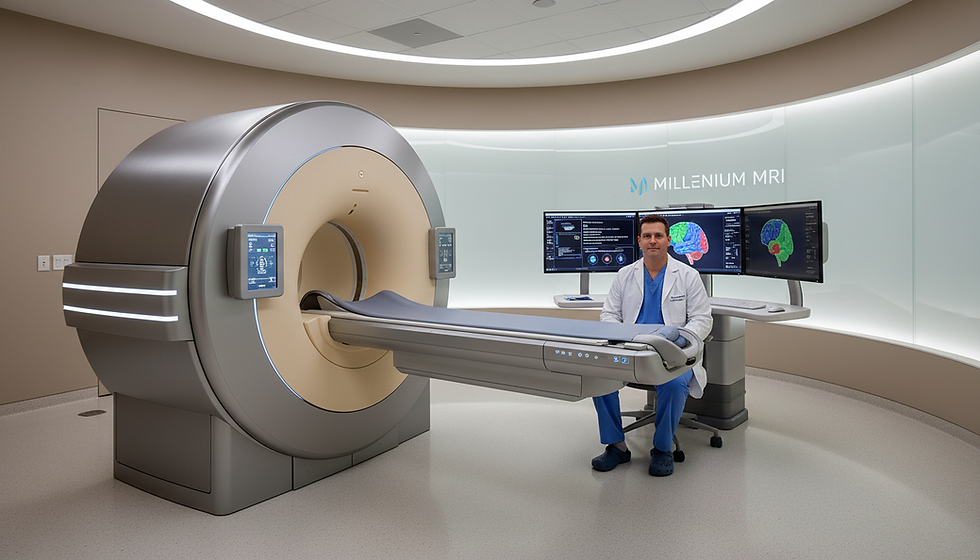

This is a helpful explanation of how MRI supports multiple sclerosis diagnosis and follow-up. It’s especially useful to understand that MRI works alongside clinical evaluation and other tests. For people looking for convenient healthcare and diagnostic services, <a href="https://medifyhome.com/mri-scan/">Medifyhome</a> also provides healthcare solutions and helps patients connect with medical services.